ADA Certified Portable Toilets: Federal Access Rules for Rentals
When people look for an ada compliant mobile toilet, they are normally trying to resolve a functional issue under time pressure. A school is planning a field day. A city is establishing a weekend break event. A church is holding a fundraising event on open ground with no long-term restrooms close by. A private location is including momentary facilities for a crowd larger than its building can take care of. In each of those scenarios, access is not an optional upgrade or a great added. It belongs to offering bathroom accessibility in such a way that does not leave impaired guests, workers, or guests standing outside without functional option.
That is where the government rules matter, and where several rental choices go wrong. The biggest errors are hardly ever significant. More often, someone orders a typical bank of mobile systems, thinks one bigger device someplace on site will certainly cover the need, then positions it on grass, gravel, or a sloped edge that makes it hard or difficult to use. Theoretically, the order may look fine. In real life, it fails the individual that requires it.
The regulating government criterion in the United States is the 2010 ADA Standards for Accessible Style, as analyzed by the U.S. Access Board and the Department of Justice. For short-lived mobile toilet setups, those requirements are not abstract. They form how many available systems are needed, just how they must be recognized, and whether people can in fact reach and use them.
The guideline that answers the initial inquiry most tenants ask
The very first concern is generally basic: the amount of accessible systems do we need?
For clusters of portable single-user commode devices, a minimum of 5 percent of the devices in each collection have to come. The Accessibility Board has explained that this applies also at momentary occasions. That factor issues since many people still think short-term methods unwinded. It does not.
If you are renting a financial institution of mobile commodes for an event, the accessible matter is connected to the cluster itself. The guideline is not satisfied by claiming there is an easily accessible washroom somewhere else on the home if the mobile commode collection people are actually utilizing does not include the required available system or units. The cluster is the pertinent setup.
In daily preparation, this is where an ada portable toilet rental order needs more idea than an easy head count. Occasion planners typically concentrate on complete attendees and service intervals, which are necessary for sanitation, however federal availability policies produce a different demand. Even if the typical devices appear adequate for group volume, the accessible system count still has to be addressed.
This is also where terminology can muddy the discussion. Vendors, planners, and locations may use phrases like ada available mobile restroom, ada portable washroom, ada handicap easily accessible portable restroom, or ada compliant accessible mobile bathrooms. The tags vary. What issues is whether the system and its positioning actually satisfy the appropriate government accessibility standards.
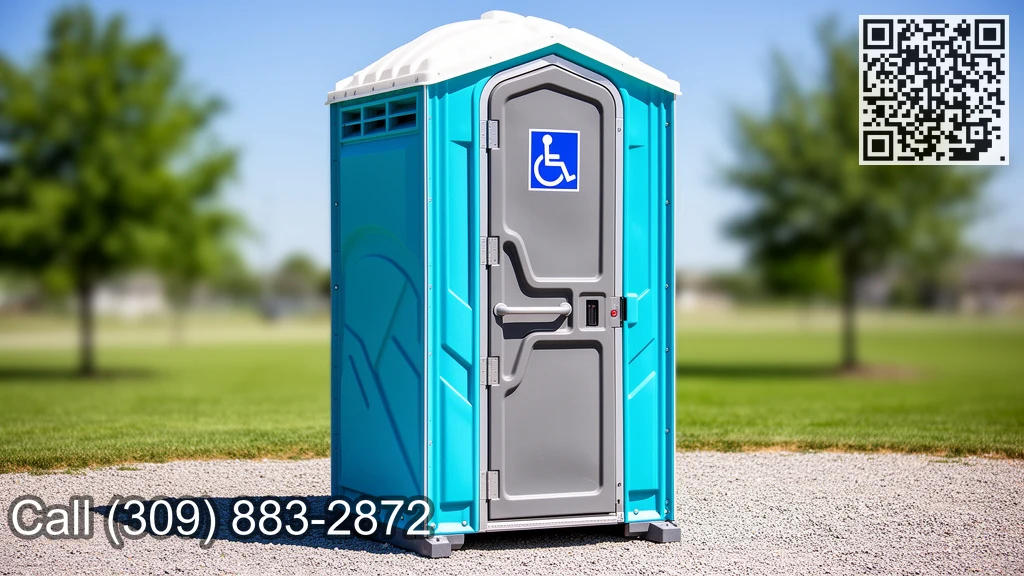
Bigger is not the same as compliant
A remarkably typical misunderstanding is that a larger portable commode immediately certifies as accessible. In practice, dimension alone does not respond to the question.
The mobile obtainable units should fulfill toilet-room technological requirements. That consists of fixture clearances, turning room, door maneuvering clearances, and relevant grab-bar and water-closet clearance rules. Those are useful style needs, not marketing language. A device can be roomier than a basic mobile commode and still miss what the criteria require.
That difference issues during getting. If a supplier offers what seems like a larger family, a transforming device, or an oversized portable toilet, the renter ought to not think it is an ada certified portable restroom unless the supplier is specifically representing it as meeting ADA demands. The exact same goes with informal shorthand such as "wheelchair system" or "accessible style system." Those expressions may be utilized loosely in the area. The government criterion is not loose.
People that have never ever needed to think about navigating clearances commonly picture access as a solitary concern of door width. Real use is more complicated. An individual might require adequate space to enter, close the door, turn, position near the bathroom, and utilize grab bars securely. If among those steps breaks down, the bathroom is not meaningfully accessible.
Placement can make a certified system unusable
I have actually seen rental arrangements where the best unit was ordered and the incorrect ground beat the entire effort. This is one of the most discouraging failures because it is so avoidable.
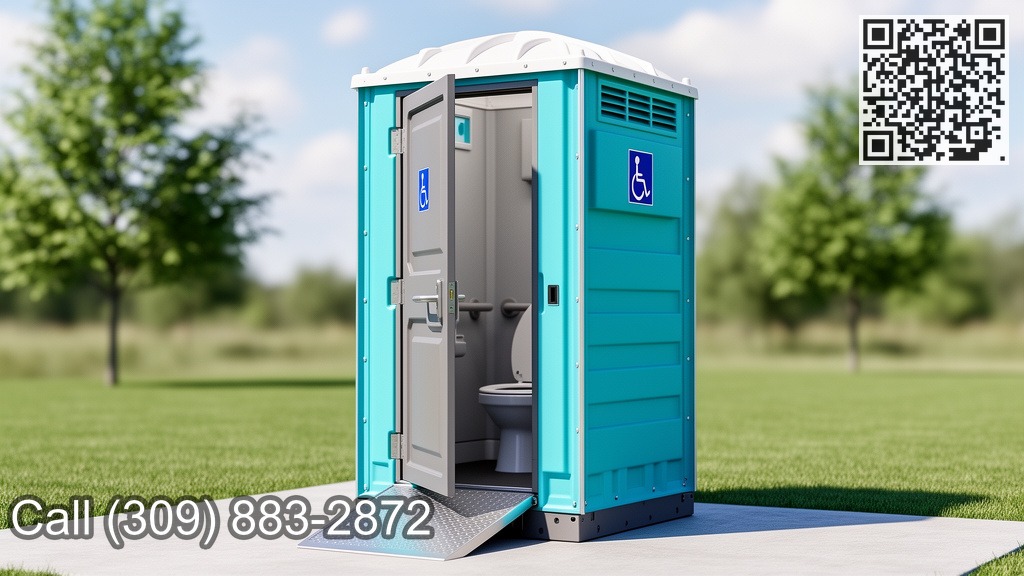
Accessible mobile toilet devices should have an accessible path and entryway. If ramps or landings are required, they have to abide by the ADA technological demands. That implies compliance does not quit at the device shell itself. The course to the system matters. The entrance problems issue. The surrounding surface and slope can matter in an extremely functional way.
An ada-compliant mobile commode positioned at the much side of a muddy field might check a box in a contract however still be pointless to many people. The same is true for a device put where wheel traffic sinks into soft ground, where a threshold condition is uncomfortable, or where the only approach pressures a person through a stuffed service area. Federal availability is not nearly the existence of the unit. It has to do with access to it.
This is one factor seasoned website organizers stroll the layout before distribution, not after. They think about arrival, blood circulation, and what the restroom experience will certainly seem like for a person making use of a mobility device or various other flexibility help. They also think of climate. A route that appears acceptable on a completely dry configuration day can develop into a problem after rain, specifically on short-lived occasion sites.
For tenants, the most safe practice is to discuss positioning early, not as a final decline guideline. If there are numerous toilet financial institutions across a residential property, each cluster should be reviewed, not simply the total order quantity.
Identification becomes part of the policy, not just a courtesy
Accessible portable commode units have to be related to the International Sign of Access. That demand may seem minor compared with course and clearance issues, however it serves an actual function.
People must not need to presume which system is the available one. At crowded events, complication wastes time and produces uncomfortable interactions, especially when assistants, volunteers, or other guests start rerouting somebody based upon presumptions. Clear identification helps users find the system intended to meet access demands. It additionally helps personnel screen whether the available bathroom stays open, reachable, and in service.
This factor is simple to overlook when a rental lawn sends blended inventory or when occasion branding is layered over the bathroom location. Attractive covers, signs, fence, and group control ought to not obscure the ease of access icon or make the unit tough to determine. If the device exists but not plainly marked, the website is creating a problem it did not require to create.
Temporary occasion does not imply temporary responsibility
Many coordinators think federal accessibility criteria apply most strictly to irreversible structures and less strictly to short-term occasion framework. That presumption results in faster ways, and shortcuts often tend to appear in bathrooms first.
The Gain access to Board states the 5 percent accessible-unit guideline uses even at short-lived events. That is worth resting with for a moment. A one-day reasonable, a three-day concert, a college circus, or a weekend showing off event might be short-term on the calendar, yet the responsibility to provide available commode access does not go away just because the structures are rented out and transported away later.
That is specifically crucial for public-facing events where presence is open and differed. If the only accessible alternative is in a far-off building, secured center, or separate location not incorporated with the occasion circulation, that frequently indicates bad planning even prior to any person starts asking lawful concerns. People observe when the easily accessible toilet is treated as an afterthought.
A much more gentle method is likewise the much more functional one. Put the accessible system where an individual would sensibly expect it to be, amongst the cluster it offers, on a path they can actually use, with sufficient surrounding room to strategy and maneuver. The goal should not be a technological near miss out on. It ought to be self-respect without extra hassle.
The construction-site wrinkle people misread
There is one location where individuals typically hear a partial regulation and apply it also extensively. The ADA Specifications distinguish mobile commode units at building and construction sites utilized specifically by building personnel. Those are treated in different ways under the older 1991 typical referenced in the verified context, which spared that classification from the portable-toilet availability scoping need cited there.
What that does not imply is that general mobile toilet leasings are in some way extensively excluded. They are not. If you are arranging mobile bathrooms for public occasions, customers, visitors, patrons, visitors, or mixed-use website demands, you must not depend on a construction-site exception that was directly mounted and tied to devices utilized exclusively by construction personnel.
This is among those details that can produce false confidence. A person hears that "construction porta potties are excluded," reduces that in memory, then applies it to any kind of temporary configuration on a work-adjacent home or renovation occasion. That is not a safe analysis. The context matters.
For most common rental discussions about public-facing or event-related use, the accessible-unit requirement continues to be the pertinent rule.
What "conformity" resembles throughout a rental conversation
Most tenants do not need to memorize the government requirements. They do need to ask much better concerns. The top quality of the rental conversation commonly forecasts the quality of the delivery.
A trusted discussion concerning ada compliant portable toilets must cover the unit itself, the number of accessible systems in each cluster, how the device will certainly be determined, and just how individuals will reach it. If the discussion never obtains past "Do you have a handicap device?" that is normally too shallow.
Words matter below. "Handicap system" is still usual in the field, but a far better and much more precise strategy is to request an ada certified portable toilet or ada-compliant mobile bathrooms that meet the appropriate federal availability criteria. Accuracy helps because it forces the supplier and the occupant to focus on conformity instead of rough group matching.
The website plan matters just as much. I have actually seen skilled event supervisors mark the accessible bathroom area before they determine where food trucks go. That might appear in reverse to someone focused on group convenience, however it shows good judgment. If vehicles, fence, generators, or staging later squeeze the route, the toilet comes to be the casualty. Locking the available path right into the very early plan protects against that.
A brief rental checklist that avoids one of the most usual mistakes
Use this prior to delivery day, specifically if multiple individuals are managing website logistics.
- Confirm that each mobile toilet cluster includes at the very least 5 percent accessible units.
- Verify that the easily accessible system is related to the International Sign of Accessibility.
- Review the route to the unit, not simply the device itself, for practical accessibility.
- Check whether the entrance, and any kind of required ramps or touchdowns, will satisfy ADA technological requirements.
- Ask the supplier to confirm the system is intended to satisfy ADA toilet-room technical requirements, including clearances and maneuvering space.
That is a list, yet it captures several preventable failings. The point is not to transform every renter right into a code expert. The factor is to maintain the order from wandering into assumptions.
Why this concern is obtaining more focus, not less
Accessibility conformity is being enforced in a more comprehensive environment than several organizations and organizations recognize. One pertinent indication of that wider climate is the Division of Justice support from April 2026 expanding the target date for state and city government internet and mobile availability regulations to April 26, 2027 for larger entities. That guidance has to do with electronic access, not mobile commodes, but it shows something https://damienxrvs866.image-perth.org/ada-mobile-bathroom-rental-obtainable-route-requirements-made-simple essential: ADA conformity is active, noticeable, and increasing throughout sectors.
In simple terms, organizations must expect accessibility scrutiny to continue, not discolor. Physical accessibility and electronic accessibility are different compliance areas, yet they rest under the same larger assumption that individuals with disabilities can get involved meaningfully and without unnecessary barriers.
For mobile toilet leasings, that means the old habit of treating ease of access as a box to check late in the planning cycle is growing riskier and a lot more out of step with just how responsible drivers currently function. It also suggests suppliers who recognize accessible setups will stick out, due to the fact that they can assist customers stay clear of preventable mistakes prior to a problem, interruption, or poor event experience forces the issue.
Edge instances that deserve added thought
Some rental scenarios are straightforward. Others are not. Multi-zone events are a good example. A website may have numerous separate mobile toilet collections spread across a park, fairground, or momentary venue impact. In those cases, it is not nearly enough to focus just on the total variety of accessible devices across the entire building. The cluster-based regulation matters.
That can stun coordinators who assume one centrally situated ada mobile washroom will certainly satisfy the event. If people are making use of different toilet financial institutions in different areas, each collection needs focus. Otherwise, a visitor may discover that the toilet nearest the stage, household area, supplier area, or sporting activities area is unattainable, while the only available unit is much away.
Another tricky situation includes shipment surface areas. An arrangement may practically consist of an obtainable device, however the picked place may alter late because of climate, tools congestion, or web traffic flow. Last-minute actions prevail in event procedures, and they are where access typically gets jeopardized. An unit moved from a tough, secure area to rough ground can end up being much less usable despite the fact that the paperwork never ever changed.
Then there is the issue of token positioning. Often an obtainable mobile bathroom is put behind the main collection, beside storage, or in a side lane that feels different from the event. While the verified federal realities below do not talk to every design subtlety, anybody with sensible experience understands that sidelining the obtainable unit frequently produces both dignity issues and blood circulation problems. If the device is more difficult to find, more challenging to get to, or aesthetically treated as outside the main visitor experience, customers feel that difference immediately.
Working well with suppliers and venues
The ideal rental outcomes generally originate from three parties taking availability seriously at the exact same time: the tenant, the vendor, and the website host. Problem starts when each presumes another person is dealing with it.
Venues in some cases presume the mobile toilet business will instantly deliver the appropriate ada compliant mobile toilets and position them correctly. Vendors occasionally presume the site organizer recognizes course and surface area problems. Event organizers in some cases presume the location has actually already authorized available positioning. Those assumptions leave gaps.
A better working rhythm is easy. Make a decision early which restroom clusters are required, identify where the obtainable systems will certainly go within those collections, and validate that the route and entryway will function under real event problems. If there is any type of unpredictability, stroll the site. The walk often reveals problems the site map hid.
This is likewise the minute to ask straight concerns without humiliation. Can the unit be positioned on an extra secure path? Will crowd-control obstacles block the method? Exists sufficient room around the door location for steering? If rainfall changes the ground problems, is there a back-up location? Those are not picky information. They are the difference in between compliance language and functional usability.
The human side of obtaining it right
A portable bathroom is not attractive facilities. That is exactly why poor decisions occur around it. People put their interest on stages, food catering, signs, parking, or ticketing, then thrill bathroom placement at the end. Yet for a visitor that can not utilize the available restroom, the event experience tightens quick. It comes to be demanding, embarrassing, and often physically risky.
Getting an ada-compliant mobile toilet configuration right interacts something bigger than legal understanding. It states the organizer expected disabled people to be present and planned for them as part of the group, not as an unique exemption. That is a small functional option with a big social meaning.
It also tends to improve the site for every person involved. Clear routes reduce complication. Better placement aids assistants and custodial teams. Correct identification minimize misdirection. Thoughtful spacing makes traffic circulation smoother around the bathroom bank. Accessibility planning hardly ever assists just one group.
If you are renting out portable systems and trying to iron out the government baseline, keep the concentrate on what the rules in fact call for. For clusters of single-user portable commodes, at least 5 percent needs to be accessible, even at momentary occasions. The accessible device needs to be identified with the International Icon of Availability. It must be obtainable by an obtainable route, and if ramps or landings are needed, they have to meet ADA technological needs. The unit itself have to fulfill relevant toilet-room technical demands, consisting of clearances and navigating space.
That is the core. Every little thing else is implementation. And in portable bathroom services, execution is where compliance either materializes or quietly falls apart.
 Ask ChatGPT
 Ask Grok
 Ask Perplexity
 Ask Claude
 Ask Google AI
 Ask You
Ends · TROYWMYH021